 O'zbek
 slovenský
 Azərbaycan
 Қазақ
Қазақ Latine
 ລາວ
ລາວ български
 नेपाली
 فارسی
فارسی Javanese
 Українська
 Lietuvos
 Română
 Slovenski
 پښتو
پښتو Punjabi
 Bosanski
 Malti
Malti Galego
 Afrikaans
 Esperanto
 简体中文
简体中文 Српски
 मराठी
मराठी Ελληνικά
 čeština
 Polski
 ไทย
ไทย Nederlands
 Italiano
 Tiếng Việt
 Deutsch
 français
 русский
 Português
 Español
 한국어
한국어 Svenska
 Malay
Malay اردو
اردو norsk
norsk Indonesia
 عربى
عربى Gaeilge
 Türk
Türk Pilipino
 हिन्दी
 Dansk
Dansk বাংলা
বাংলা English
Plane Turning Belt Conveyor helps the logistics industry move into a new era
Plane Turning Belt Conveyor
With the continuous development of the logistics industry, in order to improve efficiency and reduce costs, various advanced conveying equipment are emerging one after another. Recently, a new type of conveying equipment - Plane Turning Belt Conveyor is gradually emerging and attracting widespread attention in the industry.
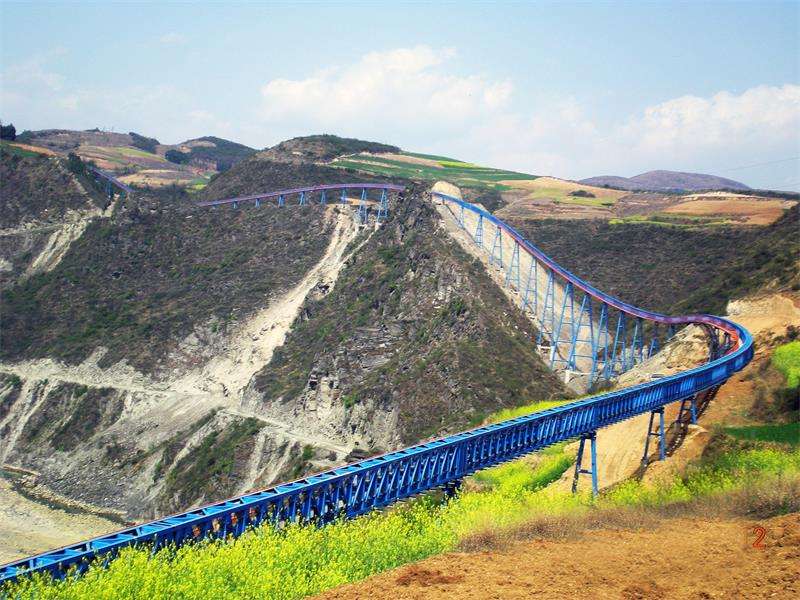
1. Equipment principle
The Plane Turning Belt Conveyor adopts an innovative turning design that enables flexible turning in the horizontal direction through a high-tech conveyor belt and support system. Compared with traditional roller conveyors, this design greatly improves the transportation efficiency of the logistics system.
2. Advantages brought by innovative design
a. Efficient turning: The biggest feature of Plane Turning Belt Conveyor is its excellent horizontal turning ability. Traditional roller conveyors require additional turning devices when turning, while the Plane Turning Belt Conveyor achieves smooth and efficient horizontal turning through a unique conveyor belt design, saving a lot of space and energy.
b. Wide range of applications: Due to its excellent turning performance, Plane Turning Belt Conveyor is suitable for various scenarios, including warehousing, production lines, packaging and other links. Whether it is for small batch, high-frequency material transportation, or for overall logistics planning of large warehouses and production workshops, this equipment is capable.
c. Reduce maintenance costs: Traditional conveyors often suffer from greater friction and loss at corners, resulting in high maintenance costs. The Plane Turning Belt Conveyor uses highly wear-resistant and corrosion-resistant materials, which effectively reduces the maintenance cost of the equipment and extends its service life.
3. Broad industry application prospects
a. E-commerce warehousing: With the vigorous development of the e-commerce industry, warehousing efficiency has become a core factor affecting overall operations. The efficient turning design of the Plane Turning Belt Conveyor enables it to better adapt to changing logistics needs in the warehousing process and improve warehousing efficiency.
b. Manufacturing production line: In the manufacturing field, the efficient operation of the production line is crucial to overall production efficiency. The flexible turning design of the Plane Turning Belt Conveyor enables efficient and smooth conveying even in small workshops, and is expected to become a new favorite in manufacturing production lines.
c. Packaging industry: In the packaging process, the Plane Turning Belt Conveyor's efficient turning capability provides more possibilities for material transportation, making packaging operations smoother and more efficient, and is expected to become a new trend in the packaging industry.
4. Technology drives industrial upgrading
The new design of Plane Turning Belt Conveyor is a strong proof of technological and industrial upgrades. It uses advanced materials and processes, combined with an intelligent control system, to make the equipment more intelligent and convenient. This technology-driven upgrade not only improves the overall level of the logistics industry, but also provides strong support for the digital transformation of related industries.
5. Industry response and prospects
The launch of the Plane Turning Belt Conveyor has attracted great attention from the industry. Many logistics companies and manufacturing industries have expressed their intention to try it out, and the preliminary results have been affirmed. Industry experts believe that the successful application of this equipment will drive the innovative development of the entire conveying equipment industry and inject new impetus into the upgrading of the logistics industry.
In the future, Plane Turning Belt Conveyor is expected to set off a revolution in the logistics industry. Its efficient turning design will greatly improve transportation efficiency, reduce operating costs, and bring more possibilities to the logistics industry. At the same time, the successful application of this equipment will also promote the entire conveying equipment industry to develop in a more intelligent, green and efficient direction. The logistics industry is ushering in new opportunities, and Plane Turning Belt Conveyor has become a shining star in this opportunity.


Setting Sail for Global Markets! Shenyang Juli's High-End Mining Belt Conveyor Equipment Successfully Shipped to Turkey
This shipment comprises a complete set of core components—including redirection units, drive units, and tensioning systems—marking another significant export milestone for the company as it deepens its presence in the overseas mining equipment market.
Read MoreUses of Bridge Bucket Wheel Reclaimer in Modern Bulk Material Handling
In large-scale industrial operations such as mining, power generation, ports, and steel production, efficient bulk material handling systems are essential for maintaining productivity and operational stability. Among the most advanced equipment used for stockyard management is the Bridge Bucket Wheel Reclaimer, a high-capacity machine designed for continuous material recovery and stacking operations. As global industries continue to expand, the importance of this equipment in automated handling systems is becoming increasingly significant.
Read MoreWhat is Bridge Bucket Wheel Reclaimer
A Bridge Bucket Wheel Reclaimer is a large-scale bulk material handling machine widely used in stockyards, mining operations, ports, and power plants. It is designed to continuously reclaim stored bulk materials such as coal, ore, limestone, and other raw materials, and transfer them into conveyor systems for further processing or transportation. With increasing demand for automated and efficient material handling systems, this equipment has become an important part of modern industrial infrastructure.
Read More